

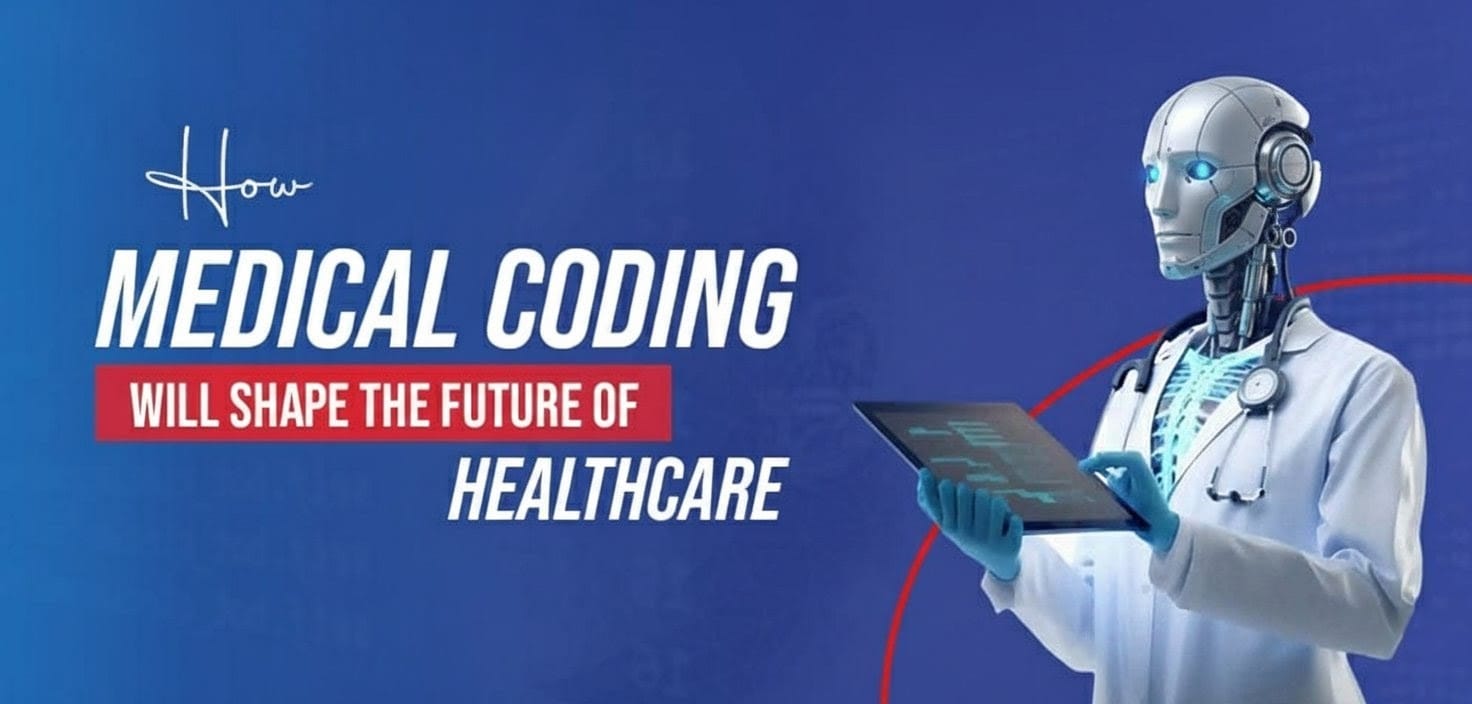
Medical coding has ceased being an office requirement in the dynamic healthcare environment and has developed into a strategic centrepiece with the ability to influence the areas of reimbursement and compliance, as well as patient care and data-analytics. The role of coders is developing quickly, and such companies as MedOps 360 are assisting healthcare providers in keeping up with these shifts as we move into 2025.
This is the way medical coding is defining the healthcare future-and what you should know.
1. More than Reimbursement: Coding as a Care Quality Indicator
Conventionally, medical coders used to record the diagnoses and procedures to get the claims properly processed. However, nowadays, correct coding is also a measure of the quality and outcomes of clinical practice. The workload of care, particularly in the management of chronic diseases and value-based care models, is increasing the value of coding accuracy to determine performance and reimbursement, as noted by the analysts.
This implies that coders not only need to transcribe services in codes, but also need to document to support care complexity, comorbidities, and patient outcomes. To the providers of healthcare, this change renders the act of coding to become not just a cost-center, but also a strategic asset.
2. The Future of Coding is Technological, Automated, and Artificial Intelligence
The emergence of automation, artificial intelligence (AI), and natural-language-processing (NLP) tools is one of the largest changes in medical coding. With these technologies, it is becoming possible to analyse clinical documentation, propose the right codes, and identify errors that will not be submitted out of the system.
For example:
- AI-based code instruments will be able to scan notes, detect missing elements, and suggest ICD or CPT codes.
- Patterns that are linked to denials and assist proactive remediation are identified and labeled by machine-learning models.
- The process of automation is lessening the load of repetitive work-coders can work on the most difficult cases and other value-added monitoring.
The result: expected increase in accuracy, reduced denials, improved claim turnarounds, and increased use of resources in a more strategic manner.
3. Telehealth, Outpatient Settings and Specialty Coding Requirements
With the change in healthcare delivery, such as telemedicine, outpatient surgery, home health, integrated behavioural health, so are the requirements when it comes to coding. Coders need to be adapted in time to new codes, bundles, and payment models.
Coders will be required to an increasing extent to:
- Learn about the billing and coding peculiarities of telehealth.
- Operate in outpatient or hybrid settings on complicated documentation.
- Record elaborate comorbidities and risk adjustment codes to facilitate value-based care.
This broadening field has the implication that coding professionals are emerging as important collaborators in the new care model adaptation.
4. Data Analytics, Interoperability & Real-World Insights
Medical codes do not only provide fuel to billing systems, but it is the language of healthcare information. With the rise of meaningful insights where interoperability and analytics are at the core of the healthcare strategy, coders play a crucial part in facilitating meaningful insights.
Accurate coding enables:
- More trustworthy population health, research and policy data.
- Enhanced congruence with quality measures and regulatory reporting.
- Better monitoring of care-episode costs and outcomes.
In this regard, medical coders play an important role in converting raw clinical data into actionable intelligence.
5. Professional Advancement and the Demand of Specialised Knowledge
As the role of a coder becomes wider, the need to have a certified and specialised coder is increasing. The industry research claims greater demand for the professional knowledge of chronic-disease coding, behavioral health, telehealth, and AI-enhanced procedures.
In the case of healthcare providers and billing partners like MedOps 360, this implies investing in continuous training, taking advantage of the hybrid human+AI workflows, and developing scalable teams capable of responding to the changing care delivery.
Final Thoughts
Essentially, medical coding is changing into a transaction process to a modern healthcare strategic base. Supporting value-based care and analytics to empower next-gen technology and outcomes measurement, the sphere is in the process of transformation, and the providers who adapt to it will get a competitive advantage.
We are assisting clients to face this future at MedOps by integrating high-performance code, highly developed automation tools, and preemptive analytics. When you are willing to take your revenue cycle and level of care to new heights, you should not view coding as your chore, but rather a key stakeholder in your healthcare revolution.